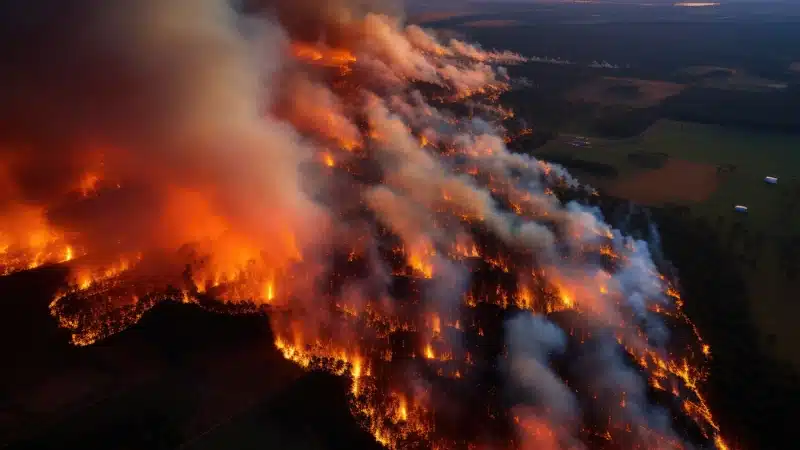
Marin’s largest wildfire was the 1923 fire that started near Novato and burned nearly 50,000 acres. It was caused by a powerful offshore wind event known as Diablo Winds and destroyed numerous homes, timber, and grazing land. This fire was a terrible warning. It showed that wildfires could move from wildlands into our neighborhoods. This danger zone is called the Wildland-Urban Interface, or WUI.
The message was clear- construction methods had to change. Embers travel far ahead of the fire, attacking homes first. This new understanding forced a major shift in building codes. The evolution of these rules, especially for components like fire resistant vents, defines how homes are built in fire-prone areas. In this blog, we will show how the 1923 wildfire led to smarter, stronger construction rules.
How Development Expanded Wildfire Risk in Marin County
The 1923 blaze is still the largest wildfire in Marin’s history. As Marin County continued to develop in the decades after this wildfire, construction expanded into previously undeveloped areas. New homes were developed on ridges, in canyons, and along the slopes of Mount Tamalpais.
This pattern of growth placed entire neighborhoods directly in the path of potential wildfires. The separation between wildland and urban areas began to disappear. Houses now stood where fires naturally occur, creating a new problem where structures themselves could fuel the spread of fire. The challenge evolved from simply managing forest fires to preventing homes from igniting.
California’s Response to Growing Wildfire Risk in Marin County
Marin County’s beautiful, rugged landscape is precisely what makes it vulnerable to wildfires. This means building a home here requires a specific set of rules. The foundation of these rules is California’s Chapter 7A Building Code. However, Marin County has taken additional steps to strengthen these rules through its own local amendments, known as Title 19.
How Building Codes Changed After Marin’s Wildfire
The core of these building codes focuses on the parts of a home that face the greatest threat. For Marin County residents, understanding these code changes is the first step toward creating a safer, more resilient community. Here’s how these fire safety codes transform major components from vulnerabilities into wildfire defensive assets.
Ember-Resistant Vents
Houses in Marin County used to have large, open vents in attics and crawl spaces. These openings allowed burning embers to fly directly into a home. Once inside, embers could land on insulation or wood framing and start a fire from within.
Modern building codes require fire resistant vents to be installed in modern house or building constructions. All vents must be covered with a special metal mesh. The mesh openings are very small, no larger than 1/16 of an inch. This blocks most embers from entering. Many advanced fire resistant vents also include internal baffles that provide extra protection against floating embers.
Installing vents that comply with Chapter 7A of the Building Code is one of the most effective ways to prevent a home from burning down during a wildfire. It stops the fire before it can start inside your walls or attic. When choosing an ember-resistant vent, look for one that is approved for all Wildland-Urban Interface (WUI) zones and independently tested to standards like ASTM E2886 for proven flame and ember protection.
Fire Resistant Siding
Before building codes changed, homes in Marin County commonly featured wood shingles and untreated timber siding that could easily ignite from a single ember. Today’s building code standards require non-combustible or ignition-resistant materials. This includes materials such as fiber-cement, stucco, brick, and fire-retardant-treated wood in high-risk zones.
Marin County has implemented particularly strict local amendments that effectively ban new untreated wood siding in vulnerable areas. This transformation means a home’s exterior walls now serve as a protective shell rather than potential fuel for wildfires.
Safer Roofs, Decks, and Fences
Older roofing materials often provided inadequate protection against falling embers, while wooden decks and fences frequently acted as conduits for fire spread. Modern fire safety codes now require Class A fire-rated roofing materials, including metal, clay tile, and specific composite shingles.
Additionally, any fence within five feet of a structure must use non-combustible materials. These changes ensure that all exterior components work together as a unified defensive system rather than potential pathways for fire.
Heat-Resistant Windows
Single-pane windows were common in older construction in Marin County. These windows can shatter when exposed to the intense heat of a nearby fire, creating an opening for flames to enter.
Current building codes require insulated dual-pane windows in wildfire zones. In Marin, replacement windows must include at least one pane of tempered glass, which is much more resistant to heat.
Defensible Space Zones
Earlier approaches to vegetation management were often inconsistent and reactive. Today’s fire codes establish three mandatory defensible space zones that create a carefully managed buffer around each structure. These zones are:
- Zone 0 (0-5 feet): Requires the immediate removal of all flammable materials immediately adjacent to the building.
- Zone 1 (5-30 feet): Requires lean, clean, and green landscaping with proper plant spacing.
- Zone 2 (30-100 feet): Focuses on reducing fuel loads through strategic vegetation management.
This systematic approach, verified during building inspections, establishes a vital survival zone that complements structural fire resistance measures.
Conclusion
The 1923 Marin wildfire proved that homes themselves must be part of our fire defense. The rules for building houses changed completely. Architects now must use materials that resist burning embers, like fire resistant vents, stucco walls, and dual-pane windows. These rules, along with required clear space around buildings, help stop a house from catching fire in the first place. This practical approach makes entire neighborhoods safer.
At Vulcan Vents, we turn this crucial code requirement into superior protection. Our vents are engineered with a patented honeycomb matrix, offering the highest airflow in the industry while being fully Chapter 7A compliant and approved for all WUI zones. Our vents are also independently tested and fire-rated, providing strong flame and ember protection. Contact us today!

