
California continues to update safety rules as wildfires grow more intense each year. According to Cal Fire, 171+ wildfires occurred in California over the past two months. This is why understanding the California Building Code (CBC) is really important. The 2026 updates bring major changes to these codes, especially for properties built near wildfire-prone areas.
Architects, homeowners, and inspectors now need a better understanding of how construction methods are evolving and why these changes matter more than ever. The new California Wildland Urban Interface Code, which falls under CBC, focuses heavily on wildfire defense. It brings clarity, structure, and stricter standards to the design of buildings in high-risk zones. In this blog, we’ll discuss the 2026 California WUI Building Codes in detail.
Why Did California Update the Building Codes in 2026?
Previously, wildfire rules were located inside Chapter 7A of the California Building Code. While this approach worked for years, it could no longer keep up with today’s wildfire behavior. These devastating events have changed California forever. Large fires have destroyed towns, displaced thousands of families, and caused billions in damage.
Fire seasons now last longer and burn hotter. These realities forced state officials to rethink how buildings are designed and protected. The updated California Building Codes are built around lessons learned from past disasters. Recent wildfire studies reveal that most homes actually catch fire from wind-blown embers rather than direct flames.
Small gaps, vents, and weak materials allow embers inside. Once inside, fires spread quickly. The new rules aim to block those pathways. This is where the California WUI Code comes in. It creates a single set of rules focused only on wildfire protection. Instead of scattered requirements, architects now follow one clear standard.
What Is the California WUI Code in 2026?
The California Wildland Urban Interface Code officially becomes mandatory on January 1, 2026. It consolidates all wildfire safety rules into a single section under Title 24, Part 7. This marks one of the most important wildfire code updates in decades. Before this change, wildfire rules were scattered across different sections of the code.
The new California WUI Code simplifies compliance by consolidating everything into a single location. It covers site planning, construction materials, vents, roofing, siding, decks, and exterior design. It applies to any building in Fire Hazard Severity Zones, no matter its size or purpose. This also makes compliance easier for architects, inspectors, and homeowners.
Where the California Building Code Applies?
The CBC code applies to properties located in Fire Hazard Severity Zones. These areas are classified as moderate, high, or very high risk. Recent mapping expanded these zones significantly.
Many homeowners who never worried about fire codes before now fall under these rules. Homeowners can check their property classification using CAL FIRE’s Fire Hazard maps or local building department tools.
How Property Owners Can Comply with the California WUI Building Code?
Property owners can comply with the California WUI Building Code by upgrading vulnerable exterior building components. This includes installing approved WUI-compliant vents, using Class A fire-rated roofing, selecting fire-resistant siding materials, upgrading windows and doors, and building safer decks.
2026 WUI Code Vent Requirements
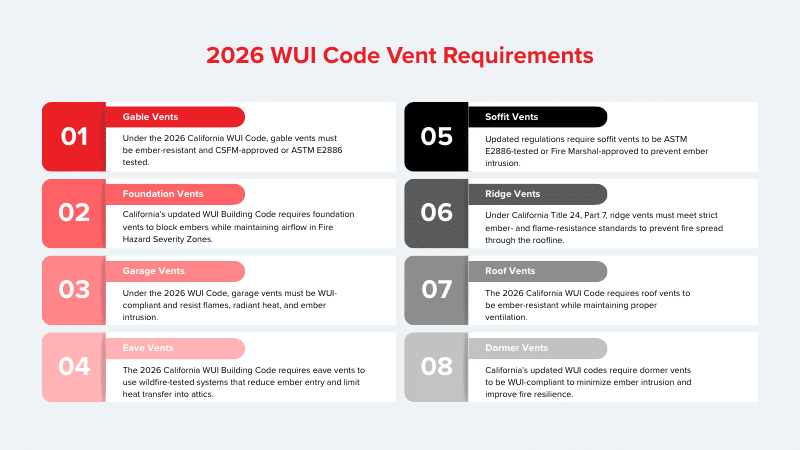
Starting on January 1, 2026, California will have stricter building rules for vents in wildfire-risk areas. The goal is to stop wildfires from entering homes through vent openings. Under Title 24, Part 7, all vents in wildfire-prone zones must now be WUI-compliant. These WUI-compliant vents are designed to block embers, resist flames, and reduce heat entering the building. Vents must meet one of the following requirements:
- Be approved by the California State Fire Marshal, or
- Pass testing under the ASTM E2886 standard
Older vent designs no longer meet the new requirements. This requirement applies to every type of vent opening in a structure, including:
- Gable vents
- Foundation vents
- Garage vents
- Eave vents
- Soffit vents
- Ridge vents
- Roof vents
- Dormer vents

Why Standard Vents No Longer Meet the California Building Code in 2026?
Traditional vents that use simple 1/8-inch metal mesh or basic louvered designs are no longer acceptable under the 2026 standards. These older vents cannot block tiny embers, resist direct flame exposure, or control radiant heat.
In wildfire conditions, even small gaps allow embers to pass through and ignite attic insulation or stored materials. Once that happens, fires spread rapidly inside the home. ASTM-tested WUI-compliant vents are specifically engineered to resist all wildfire threats. This makes them a critical upgrade for homes located in fire hazard severity zones.
Note: To know more, click on “WUI-Compliant Vs. Non-Compliant Vents in California”
Roofing Requirements
Your roof is one of your home’s strongest defenses against wildfire. Under the California Building Codes, homes in fire hazard areas must use Class A fire-rated roofing materials. Safe options include asphalt shingles, metal panels, clay or concrete tiles, slate, and modified bitumen. Wood shingles and shakes are no longer allowed because they catch fire easily and spread flames quickly.
Exterior Wall and Siding Standards
The California Wildland Urban Interface Code requires exterior walls to be built with fire-resistant materials. This is to slow down flame spread and block embers. Common choices include fiber cement siding, stucco, brick or stone veneer, concrete panels, and metal siding. Fire-treated wood can still be used, but only when it meets strict safety testing requirements. Together, these upgrades form a stronger protective barrier around your home.
Window and Door Safety Upgrades
Windows are often the first part of a home to fail during a wildfire. Extreme heat can cause glass to shatter, allowing embers to enter. To prevent this, the California Building Codes require tempered or dual-pane glass and noncombustible window frames. In very high-risk areas, stronger fire-rated window and door systems may be needed. Garage doors must also meet fire safety standards, since they are a common weak spot.
Deck and Patio Protection
Decks can easily become fire hazards when embers collect underneath or between boards. The 2026 California WUI building code requires fire-resistant decking materials that limit flame spread. Approved options include composite boards, fire-treated wood, dense hardwood, and steel framing. Architects must also install metal flashing at deck-wall connections and reduce board spacing to prevent the buildup of embers.
What Are the Benefits of Complying with California Building Codes?
- Lower risk of fire damage and ember intrusion
- Higher property value and resale appeal
- Easier home insurance approval and potential premium discounts
- Compliance with legal and permit requirements
Final Thoughts: 2026 California WUI Building Code
The 2026 updates to the California Wildland Urban Interface Building Code represent one of the most significant fire-safety upgrades in decades. These regulations are designed to save lives, reduce property loss, and improve community resilience in the face of increasingly destructive wildfires.
At Vulcan Vents, our products fully comply with California WUI standards, Chapter 7A requirements, and ASTM E2886 testing. Contact us today to upgrade your property and ensure full compliance with wildfire safety codes.
Frequently Asked Questions
Who Must Comply with the 2026 California WUI Building Code?
Any new construction, addition, or major remodel located within a designated Fire Hazard Severity Zone (moderate, high, or very high) must comply with the 2026 California WUI Code.
What Happens If I Don’t Comply with the California WUI Building Code?
Non-compliance can result in permit denial, failed inspections, construction delays, and costly rework. In some cases, insurance companies can refuse coverage or significantly raise premiums if your home does not meet wildfire safety standards.
Are WUI-Compliant Upgrades Expensive?
WUI-compliant materials can have a slightly higher upfront cost. However, they significantly reduce long-term expenses by minimizing fire damage risk, lowering insurance premiums, and increasing property value.

